
3D Printing: Transforming Modern Manufacturing
This article demystifies 3D printing, covering its process, materials, key advantages, limitations, and transformative impact across industries, while previewing future trends in manufacturing and customization.
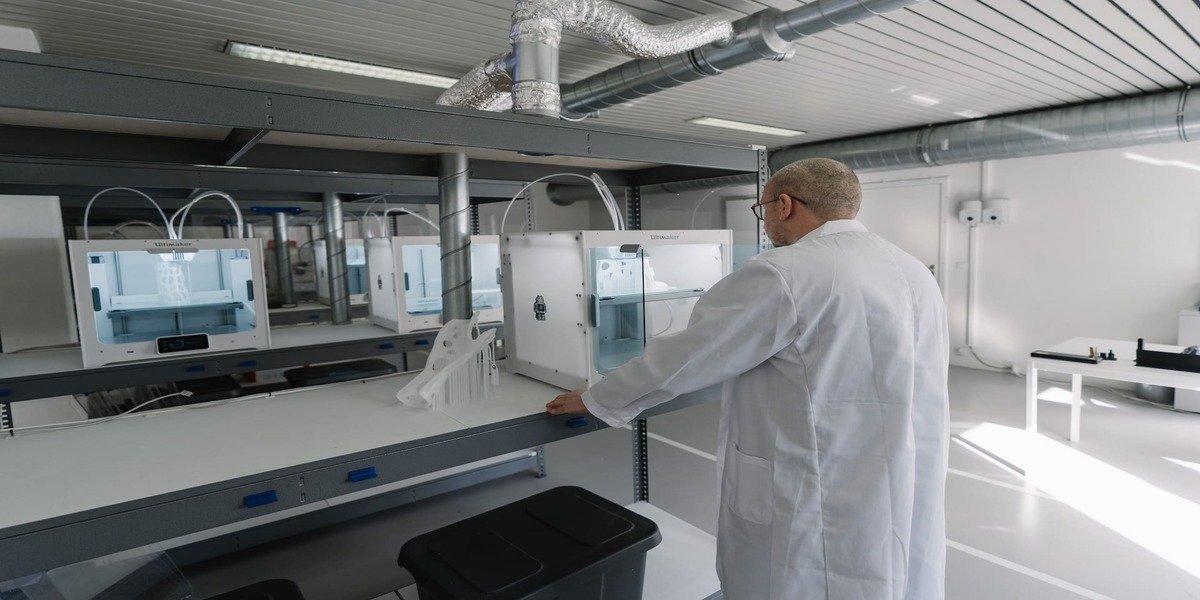
The world of manufacturing has witnessed a groundbreaking transformation in recent years, thanks to the advent of 3D printing technology. This revolutionary process, also known as additive manufacturing, has enabled the creation of three-dimensional objects from digital designs, layer by layer. The implications of this technology are vast, spanning industries from healthcare to aerospace, as it promises to redefine production processes and usher in a new era of customization and efficiency.
How Does 3D Printing Work?
At the heart of 3D printing lies a simple yet ingenious concept. A digital design is first created using computer-aided design (CAD) software. This virtual blueprint is then translated into a series of thin horizontal cross-sections, serving as instructions for the 3D printer. The printer follows these instructions, depositing material layer by layer until the object is fully formed. The materials used can range from plastics and metals to ceramics and even food items.
Frequently Asked Questions
1. What Can You Print with 3D Printing?
The versatility of 3D printing knows no bounds. It's employed in various sectors, producing items like intricate jewelry, complex industrial parts, custom prosthetics, dental implants, architectural models, and even food items. The potential applications are limited only by the…
Create an account to continue reading
Create AccountAlready have an account? Sign in
Need an expert in this space?
Talk to an Industry Expert
Knowledge Ridge connects decision-makers with carefully vetted subject matter experts for one-on-one calls, research sprints, and advisory engagements — across 11 sectors and 163 sub-industries globally.
Comments
No comments yet. Be the first to comment!