
Finite Element Method For Solving Engineering Problems
From bridges to spacecraft, engineering excellence starts with small elements. Explore how FEM revolutionizes the way we design, test, and build the world around us.
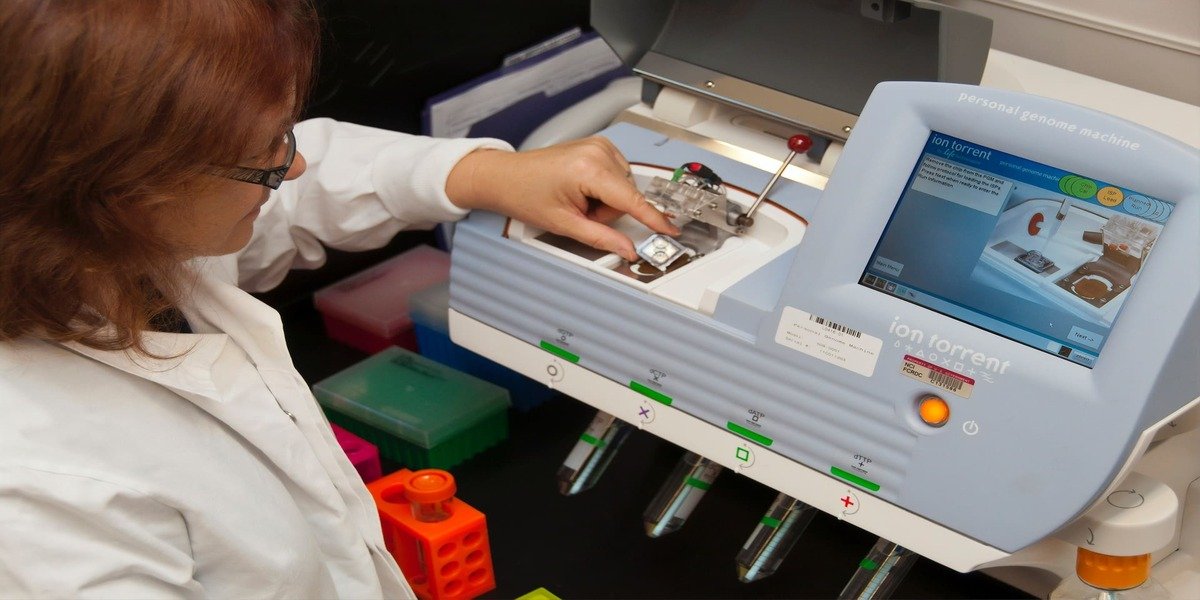
The fundamental idea behind Finite Elemental Method involves approximating complex shapes by using a combination of simpler regular shapes, such as rectangles or triangles. These smaller shapes, known as finite elements, are assembled to model the original part accurately.
Finite elements occupy distinct sub-spaces within the complex shape, allowing for easier visualization and modeling of objects like engines, airplanes, machine components, or skeletons. Unlike finite difference models, finite elements do not overlap in space.
Application of Finite Element Analysis
Traditionally, mechanical systems were analyzed by formulating differential equations based on relevant variables. However, solving these resulting mathematical models, especially nonlinear partial differential equations, was often impractical.
This is where Finite Elemental Method becomes useful. Finite Element Analysis (FEA) refers to applying FEM to specific areas of analysis. FEA is a numerical method that provides approximate solutions to complex mechanical engineering problems.
It diverges from using infinitesimally small or differential elements employed for centuries to derive differential equations. Originally a branch of solid mechanics, FEA has expanded its reach with the advent of advanced CAD and CAE tools.
It is now extensively used in solving design problems across various engineering fields, including aerospace, defense, automotive, electromechanical systems, consumer goods, heavy engineering,…
Create an account to continue reading
Create AccountAlready have an account? Sign in
Need an expert in this space?
Talk to an Industry Expert
Knowledge Ridge connects decision-makers with carefully vetted subject matter experts for one-on-one calls, research sprints, and advisory engagements — across 11 sectors and 163 sub-industries globally.
Comments
No comments yet. Be the first to comment!