
Sustainability in Data Centre Cooling
Data centres consume 10–15 TWh annually in Germany, with cooling accounting for 25%. Advances in hybrid and free cooling reduce energy use, costs, and emissions, supporting sustainable, higher-temperature, and heat-reusing operations.
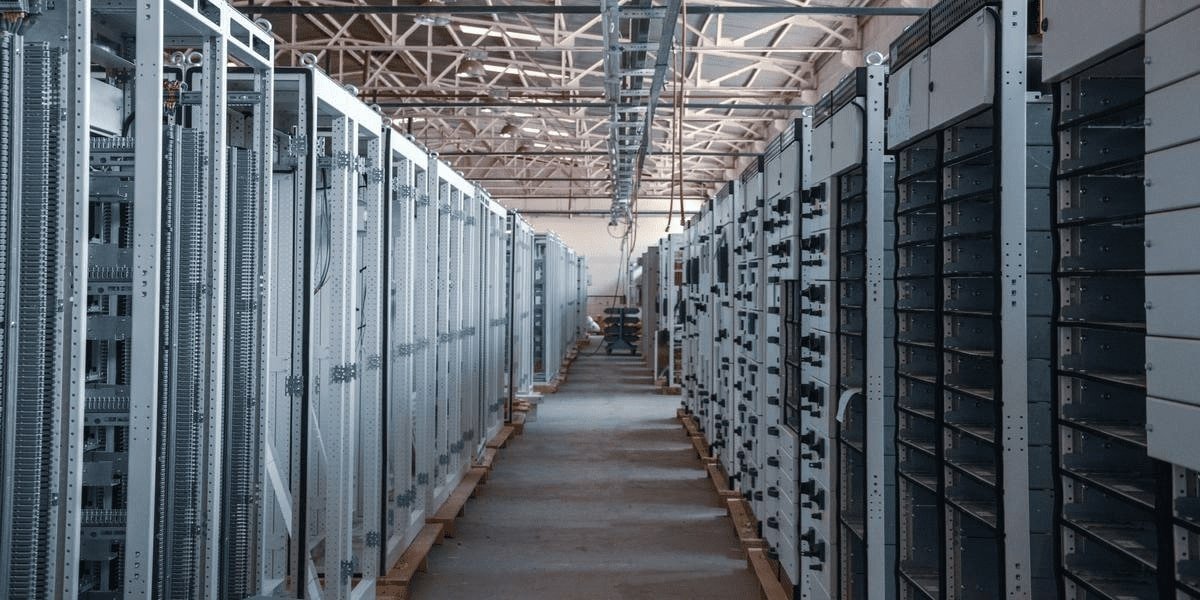
The industrial processes on a whole and, for example IT systems must continuously be improved with regard to energy consumption.
The Fraunhofer Institute for Systems and Innovation Research in Karlsruhe has deter-mined that the energy consumption of data centres in Germany currently is around 10-15TWh. Converted into CO2 equivalents, this roughly corresponds to the CO2 emissions from air traffic in Germany (before Corona). The share of the IT industry in global en-ergy consumption is around 7%. The same report also said that Google's energy con-sumption increased by 20% from 2015/2016. The cooling of the systems alone accounts for approx. 25% of the total energy consumption, so savings potential must be sought here.
Data centres around 1980 worked with room temperatures around 18-20 °C. At that time, these temperatures could only be achieved by means of ozone-damaging com-pression cooling, i.e. the energy consumption of the cooling was well over 35% due to the high proportion of compression cooling and moreover, it was also harmful to the environment.
With new technologies and location decisions the IT industry tried to get the operating costs for the "cooling" under control.
Over the years processes in the computers have been improved, and the cooling works…
Create an account to continue reading
Create AccountAlready have an account? Sign in
Need an expert in this space?
Talk to an Industry Expert
Knowledge Ridge connects decision-makers with carefully vetted subject matter experts for one-on-one calls, research sprints, and advisory engagements — across 11 sectors and 163 sub-industries globally.
Comments
No comments yet. Be the first to comment!